
amir2000.nl SEO and Performance Engineering | Case Study
A technical SEO and performance hardening project focused on keeping a large photography website crawlable, index-ready, and fast across mobile and desktop.
0. Section Map (What Each Point Means)
- 1: Executive snapshot of outcomes and measured results.
- 2: Real production problem and why it matters as the site scales.
- 3: Objectives and constraints used to keep work practical.
- 4: What was changed in architecture, SEO, and performance layers.
- 5: Evidence section with current PageSpeed scores and screenshots.
- 6: Business and operational impact after the improvements.
- 7: Tradeoffs and controls to prevent regression.
- 8: Next iteration plan to keep gains stable over time.
1. Executive Summary
This work tightened crawl structure, strengthened page-level SEO consistency, and applied performance discipline so the website remains discoverable and responsive as content volume grows.
- Mobile PageSpeed snapshot: Performance 96, Accessibility 100, Best Practices 100, SEO 100.
- Desktop PageSpeed snapshot: Performance 100, Accessibility 100, Best Practices 100, SEO 100.
- Outcome: better technical quality without changing the website's core purpose or publishing model.
2. Problem Context
Content-heavy websites often degrade slowly: internal linking weakens, metadata becomes inconsistent, and performance regresses over time. These issues reduce crawl efficiency and make organic visibility harder to maintain.
- Growing page volume increases the risk of weak page hierarchy and discoverability gaps.
- Without routine performance hygiene, loading behavior drifts as templates and assets evolve.
- Inconsistent SEO basics across pages can dilute indexing quality even when content itself is strong.
3. Objectives And Constraints
Objectives:
- Keep important pages easy to discover through clear internal structure.
- Maintain fast, stable load behavior on both mobile and desktop.
- Keep metadata and page basics consistent enough for reliable indexing.
Constraints:
- Changes must preserve site stability and existing content workflows.
- Improvements should stay maintainable, not rely on fragile one-off fixes.
- Validation should be evidence-driven using repeatable PageSpeed checks.
4. What Was Implemented
Structure and crawlability:
- Normalized high-value internal paths and navigation links so important pages stay easy to discover.
- Improved page structure consistency across templates to reduce crawl friction as content volume grows.
- Refined sitemap and page mapping coverage to improve crawl and index visibility of key sections.
Technical SEO consistency:
- Standardized page-level metadata patterns (title, description, canonical, and social preview signals).
- Reduced metadata and heading inconsistencies that can weaken search interpretation.
- Improved content structure patterns for cleaner parsing by both classic search and AI search systems.
Performance hygiene:
- Applied practical speed optimizations focused on real user loading paths and mobile behavior.
- Implemented responsive image handling for key UI assets (including high-density logo source sets).
- Fixed touch-target sizing and spacing in critical UI areas (navigation, footer links, social links, and portfolio actions).
- Kept optimizations simple and durable to support long-term maintenance without fragile tuning.
5. Evidence And Validation
Results below are the verification snapshot for this case study and serve as current evidence of execution quality.
- Mobile: Performance 96, Accessibility 100, Best Practices 100, SEO 100.
- Desktop: Performance 100, Accessibility 100, Best Practices 100, SEO 100.
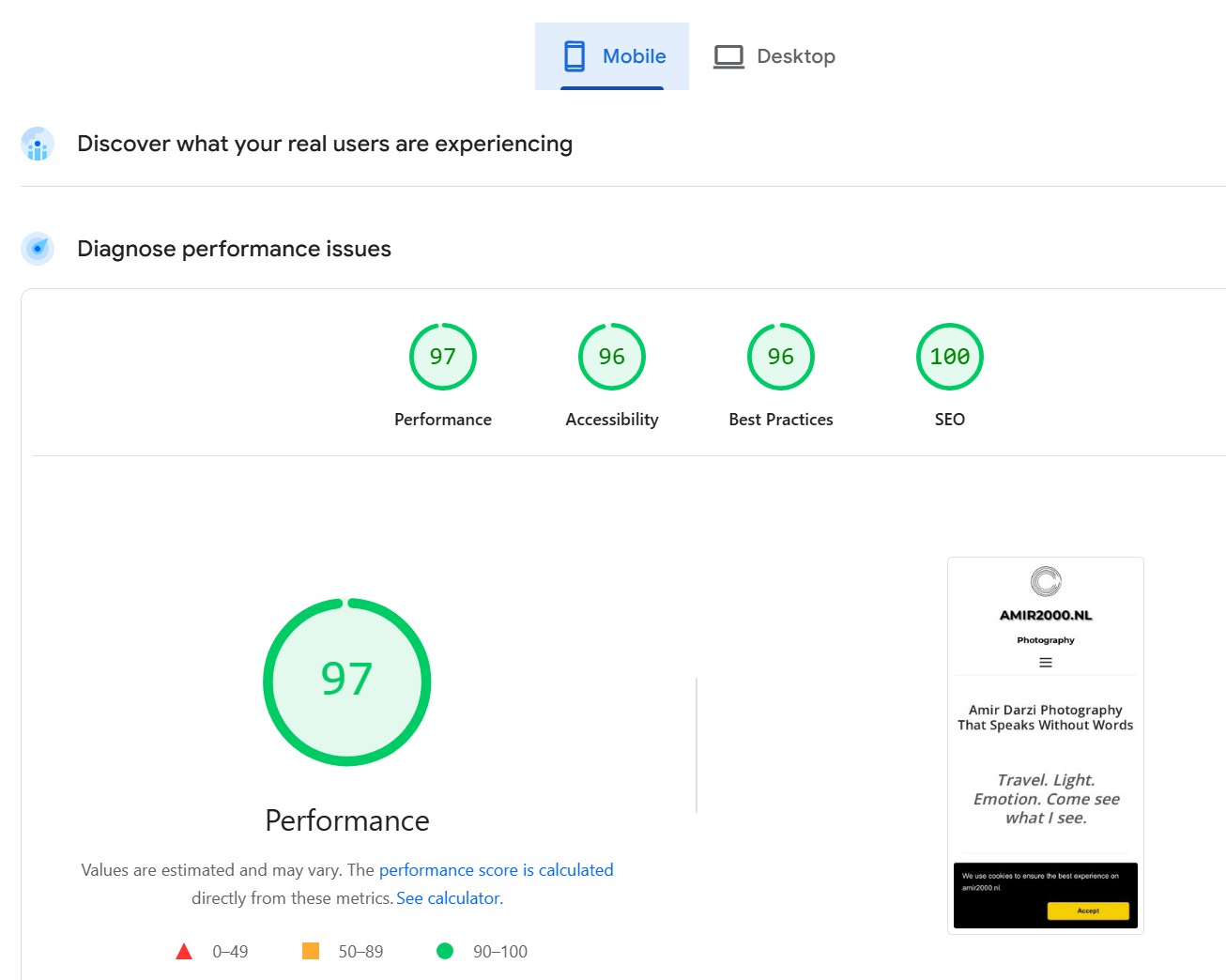
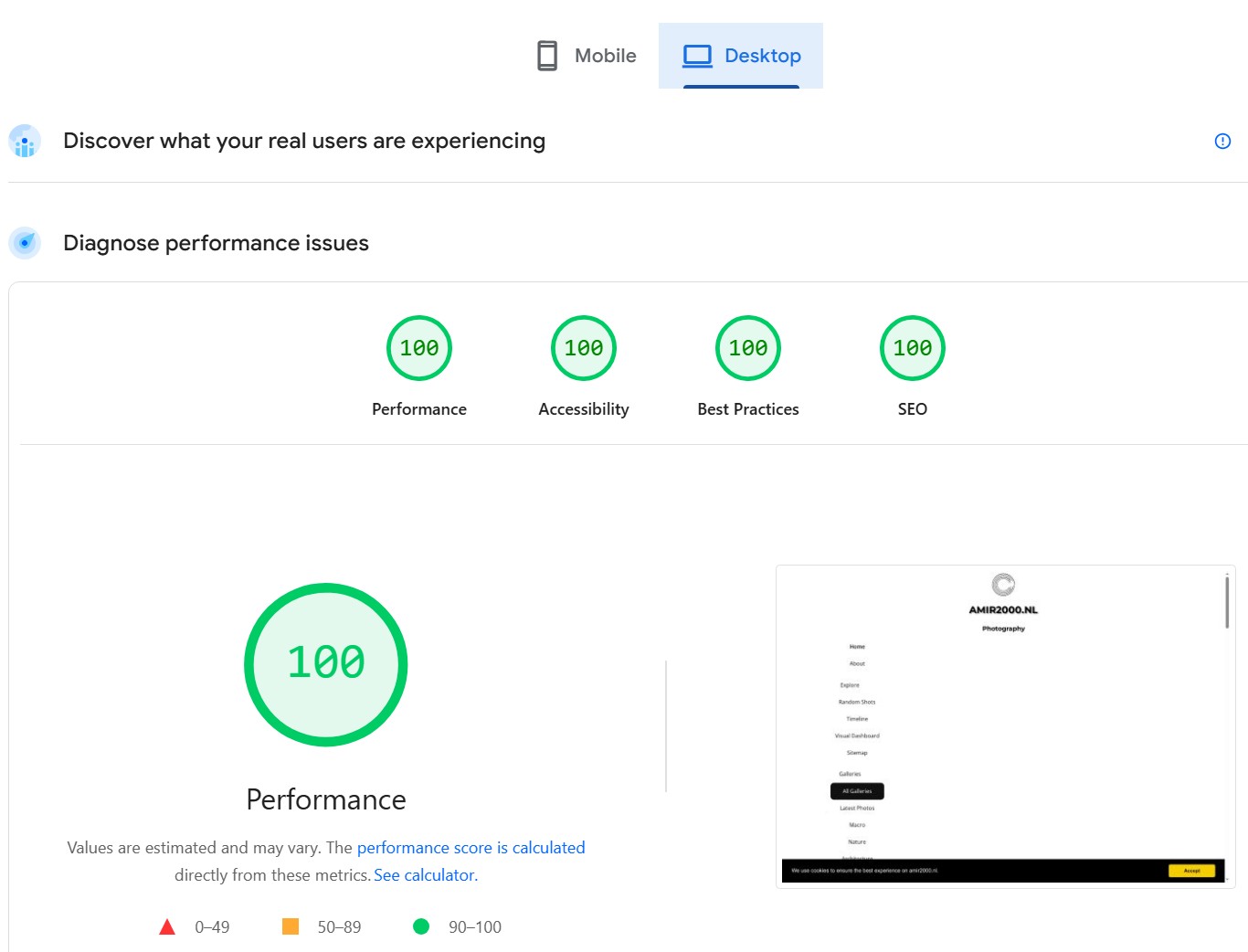
External verification links: live site and public post with screenshots.
6. Impact
- Improved confidence that key pages stay crawlable as content expands.
- Higher consistency in page quality signals used by search engines.
- Clear, shareable evidence of performance and SEO health for portfolio and stakeholder review.
7. Tradeoffs And Operational Guardrails
- Performance gains can regress without ongoing checks, so validation must be continuous.
- SEO quality depends on consistency; process discipline matters as much as technical fixes.
- Simple, maintainable optimizations are preferred over brittle high-complexity tuning.